
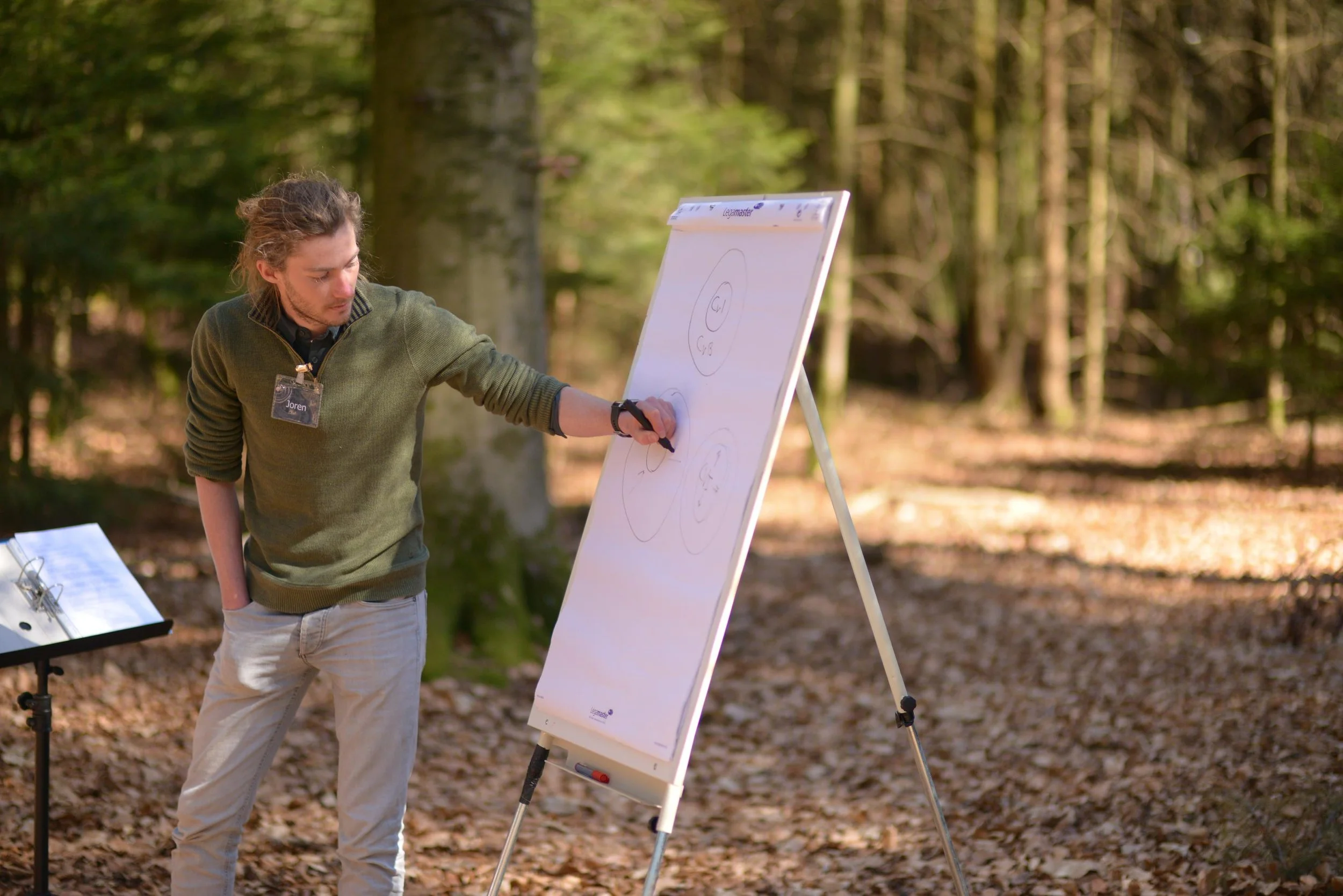
Joren Peeters, 29, coordinator of experience-based learning / youth worker
Joren Peeters (29) is a coordinator of experiential learning and a youth worker. His view of nature is straightforward and down to earth. "Nature is factual and non-judgmental," he says. "You can't argue with a rain shower. If you don't seek shelter, you get wet. Cause and effect are simple. Challenges are clear. The stimuli are calm and free of expectation. That brings peace."
He often sees tension or resistance first. For some young people, nature initially feels like it sits outside their comfort zone. What if it rains? What if they get cold? But during and after an outdoor experience, Joren repeatedly sees that initial resistance give way to peace. The need for stimulation from smartphones or social media seems to fade, and participants generally leave with a positive experience and a desire to spend more time outside. The challenge, he says, is often remembering that feeling once they are back home. Knowing that nature makes them feel good does not always mean they will choose it themselves.
Joren works with young people who are sometimes dealing with difficult circumstances, and some of the experiences that have stayed with him most are far from easy. He has seen situations in residential groups where tension escalates to the point where young people start fighting with each other or lashing out at their surroundings. "A walk through the forest gives them a chance to release that energy in a harmless way and brings calm." he says. "An indoor alternative tends to create more frustration than relief."
He has seen similar effects with young people dealing with different forms of addiction. During multi-day experiences in nature, some repeatedly tell him how much easier it feels to keep their addiction under control while they are outdoors. He remembers young people with severe anger issues who might destroy their entire room at home. In the forest, one of them became so frustrated that he wanted to kick his tent apart. But in that moment, he stopped himself and realised it would only make things worse.
There are quieter moments too. Young people who climb a mountain and then, perhaps for the first time, openly admit that they feel proud of themselves. Or young people who are often labelled as troublemakers, but who suddenly get to be children again. Spending an entire day looking for stones or playing with frogs can reveal a completely different side of them.
These are the qualities Joren sees most often outdoors: resilience and responsibility when things don't go as planned, authenticity and sincerity because there is less need to keep up a certain image, and vulnerability. Nature doesn't judge or react to who you are. It simply responds to what you do.
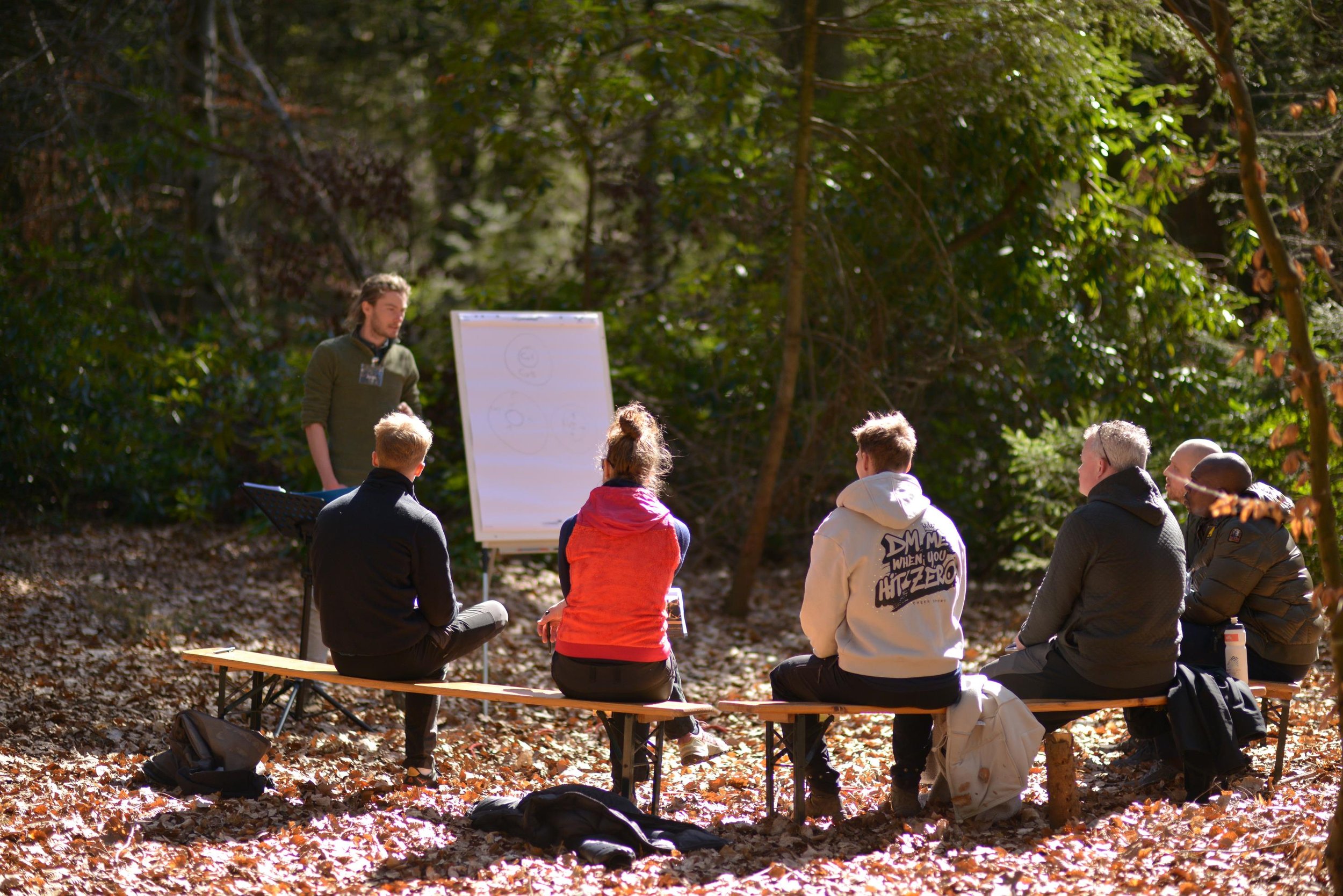
At the same time, nature is becoming a smaller part of everyday life. For an increasing number of people, going into nature has become something you plan as a rare thing rather than something that naturally forms part of the day. Joren believes that makes it even more important to create opportunities for young people to experience what being outdoors can do for them.
His favourite format is a campfire session. There is something about looking into the flames that changes the atmosphere. "It offers safety for the person speaking and focus for the person listening," he explains. The fire also engages several senses at once: the smell of the smoke, the sight of the flames, the warmth on your skin and the sound of the crackling wood. For Joren, that makes it a powerful tool for creating rituals and marking a moment together.
He also works with metaphors found in nature and regularly uses what he calls a solo. This can be as simple as a fifteen-minute walk on your own, or as immersive as spending 24 hours alone in a chosen spot in the forest. The idea is to step away from the group and distractions and pay close attention to what you see, hear, smell and feel. "It encourages people to connect with nature through their senses," Joren says. And that connection with the world around them often becomes a way of reconnecting with themselves and their own inner world.
Wanna know more about Joren’s work? Check his website here: