
A day not spent outdoors is a day not lived
A conversation with Annelies Slijpen
Annelies Slijpen has now worked outdoors for about twenty years. First as a PE teacher, where she taught outside for a large part of the school year. Later in specialized trauma care within Dutch mental healthcare. And now as a team coach and outdoor trainer, co-owner of Out of Office Team Trainings, and a freelance trainer for, among others, Nature Quest and MDT Missie, alongside her own company, Kampeer & Reflecteer.
What has struck her most over all those years is how people relax in nature. "Nature seems to bring people into a different state," she says. "As if you can almost hear them exhale. From the sympathetic nervous system, action, to the parasympathetic nervous system, rest." And when people are more relaxed, in her view, there's also more room to connect. With yourself, with your body and feelings, but also with the people around you.
She experiences it herself too, every time. When she runs a training outdoors instead of indoors, she notices she's more relaxed herself. "Because of the colors, shapes, smells, light and sounds of nature, I'm closer to myself," she says. "As a result I'm also more present and more in contact with the groups I work with."
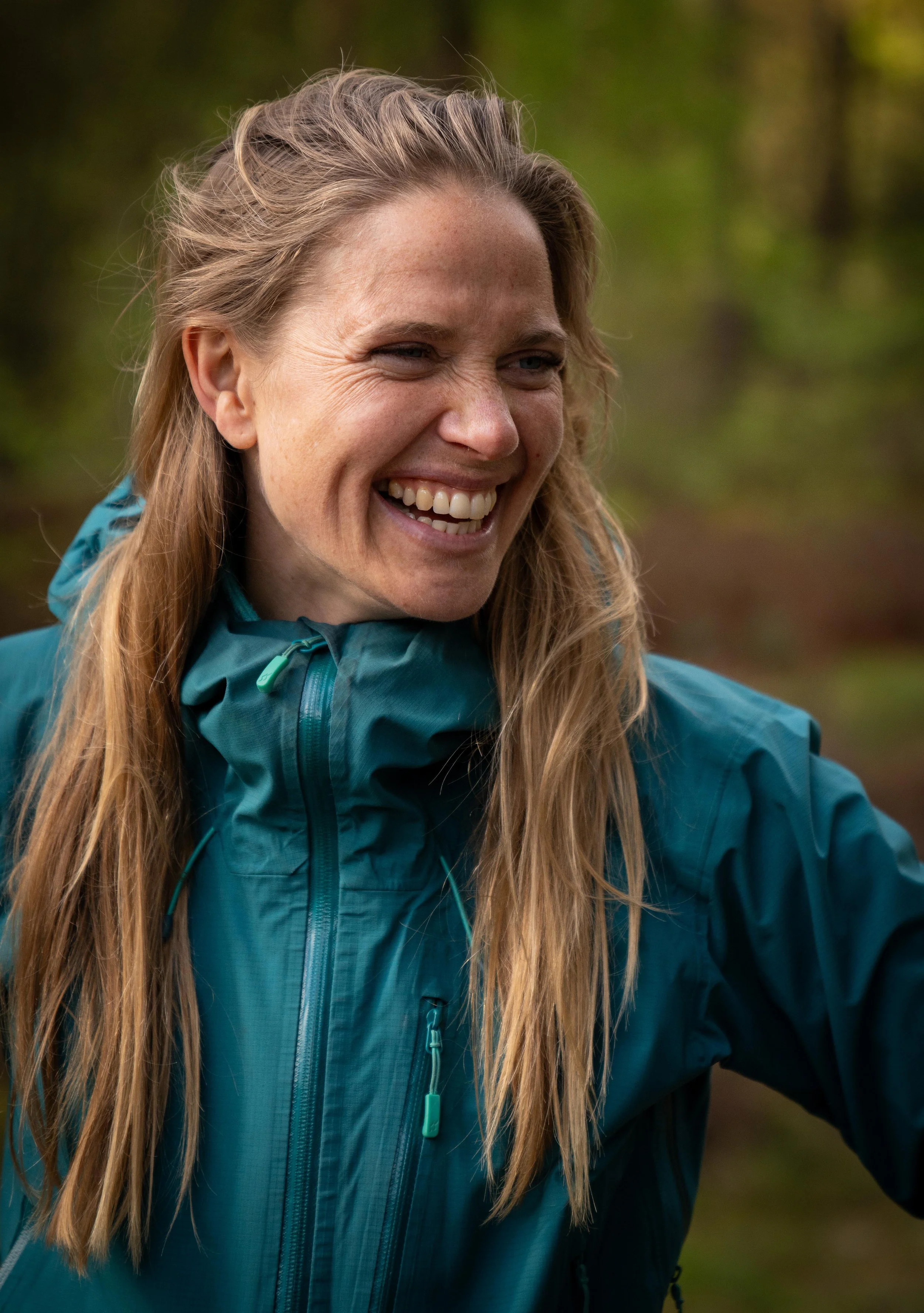
One of the periods that shaped her most was the seven years she worked in a trauma center, where clients received EMDR therapy and exposure therapy. Before or after their treatment, they came to Annelies for the movement program, which always took place outdoors in the forest. "People there often went through an intensive therapeutic process," she says. "Some were extremely apprehensive about the therapy, and all emotions passed by in their purest form. From anger and rage to relief and joy."
Every day they started with a forest walk. "What struck me time and again was how people could relax a little during that walk," says Annelies. "We walked away from the clinic into the forest, and always came back different. Often more connected to themselves, calmer, and recharged." Despite the mentally heavy themes, being outdoors brought space and relaxation. What helped was an inviting way of guiding: sometimes deliberately slowing the pace, sometimes giving an assignment to look for or make something in nature. Toward the end of the walk there was often laughter, and Annelies regularly heard: "Oh right, we have to get back to work. The therapy is still there too."
Nine times out of ten, people said afterward: "I wish I could start every day like this." Rain or shine, they went outside. Every season brought its own colors, smells and atmosphere. And for Annelies herself too, this was a special way of working. From Amsterdam and the city, she drove to her work in the forest, and she noticed she came back different than she left. Tired from all the movement, but at the same time recharged by being outdoors.
For her, the answer to why this matters so much for young people right now is actually very simple: because of all the screens. During the "Master Your Mind" training from EnergyUp, which she regularly gives to companies, she looks at how our brain works. "Our environment has changed enormously in recent decades, while our brains have only grown along with that to a limited extent," she explains. Especially for young people, whose brains are still very much developing, research shows that a lot of screen time can affect things like sleep quality, the nervous system and the degree of relaxation.
"Being outdoors often automatically means less screen time, more movement, fresh air, space, creativity, spontaneity and relaxation," says Annelies. "Just think of the difference between an office with the windows closed and a walk through the dunes, the forest, or along the beach. Sunlight, fresh air, trees, water, birds and the sounds of nature do something to us." Just thinking about it, she notices her own nervous system relaxing. "Swap screentime for greentime, from the Out of Office Foundation, is a saying I fully stand behind, and not without reason."
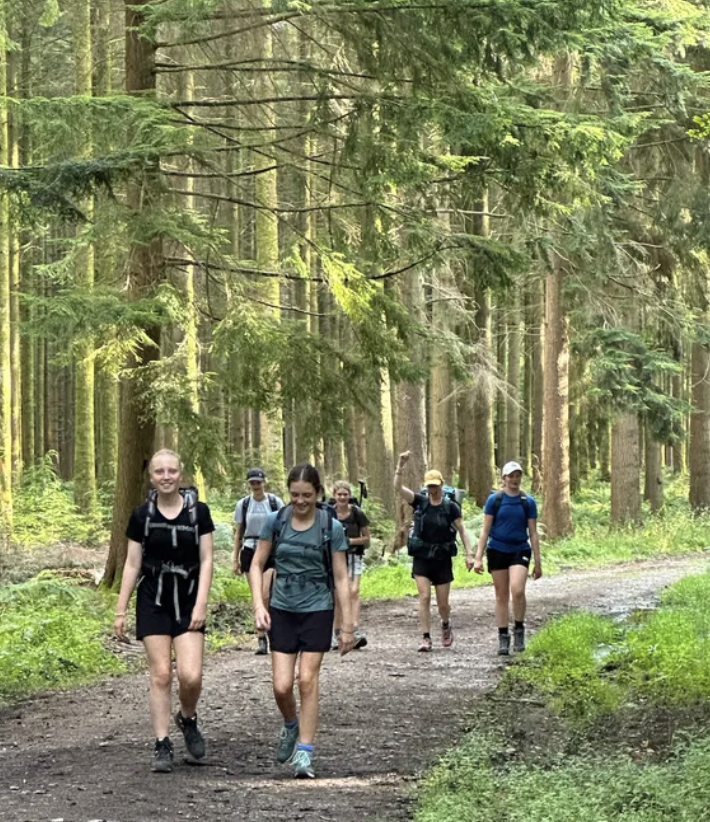
Her favorite format sounds simple, and that's exactly its strength: a connecting walk. People go out in pairs with a few questions tied to the theme of the day. One shares, the other listens, not just with the ears, but with all the senses. "How often do we really listen, without meanwhile being busy with our own thoughts, answers or ideas," Annelies wonders. Sometimes she adds an extra layer: going in search of animals, plants or trees along the way, for which points can be earned. Two investigations at once, as she calls it: one about yourself, the other about the world around you. "Whether you have the most points or not, the biggest win is that for a moment you were fully present. Not in your head, not in the past or the future, but here. In your body. In this moment."
Ask Annelies where this conviction comes from, and you get a story that goes back to when she was eleven. Her mother died when she was eleven, after an eleven year illness. She had taught Annelies' father what nature can offer in terms of adventure, beauty and support, a lesson she in turn had learned from her own mother. Rain or shine, Annelies' parents took her and her brother outside to walk. "Honestly, I used to find that terribly boring," she laughs. "The only reason I was happy to come along beforehand was the thought that we'd get hot chocolate or ice cream afterward."
Still, a lot was already being planted there. Around the age of sixteen, Annelies went on an exchange to a family in Ashland, Oregon, who took her to the Trinity Alps, a rugged nature area in Northern California. There she discovered how vulnerable humans really are amid mountains, bears, rattlesnakes and scorpions, and at the same time how special it is to place little value on possessions and instead be rich in experiences. For four summers she returned as a guide for young people, searching for the most beautiful sunrise, the clearest mountain lake, the ultimate campsite. That's when she knew for sure: one day she wanted to do this for a longer stretch of time.
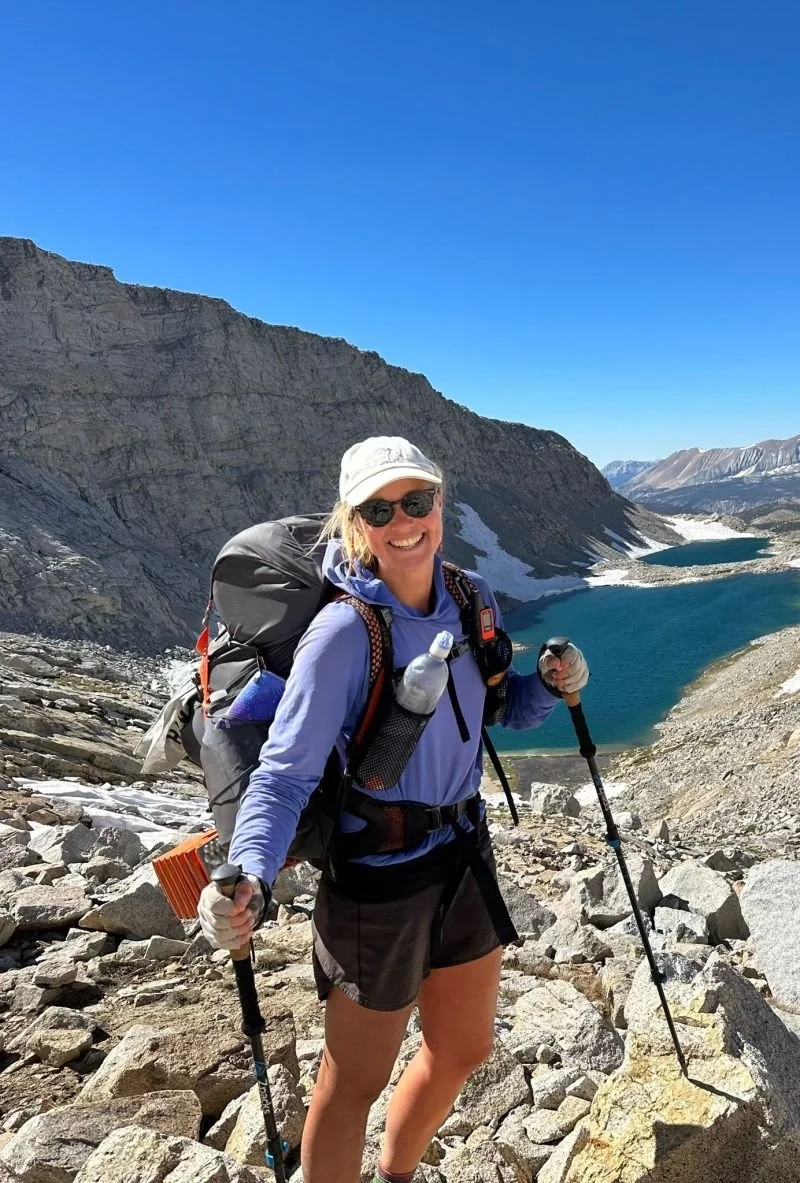
That plan eventually took shape as a hike from Mexico to Canada on the Pacific Crest Trail. In 2023 she made that dream come true. She walked more than 3,000 kilometers, border to border, in the most extreme snow year ever recorded on that route. A journey full of challenges, wonder and humility, toward nature, toward its beauty, and toward the planet we live on in perfect balance.
When she came home, she knew one thing for certain: for her, a day not spent outdoors is a day not lived. "Recently I read an article that said some people average only thirty minutes outdoors a day," she says. "That struck me." Maybe her story inspires others to live outdoors more too. Organize a meeting outside. Take your laptop outside for once. Have a phone call while walking. Or simply do something together in nature.
Because as Annelies puts it herself: sometimes it starts with just one simple choice. Going outside a little more often.