
“Outside is where I feel most alive”
Anne van der Hem on making space for experiencing awe, and finding our place in the world
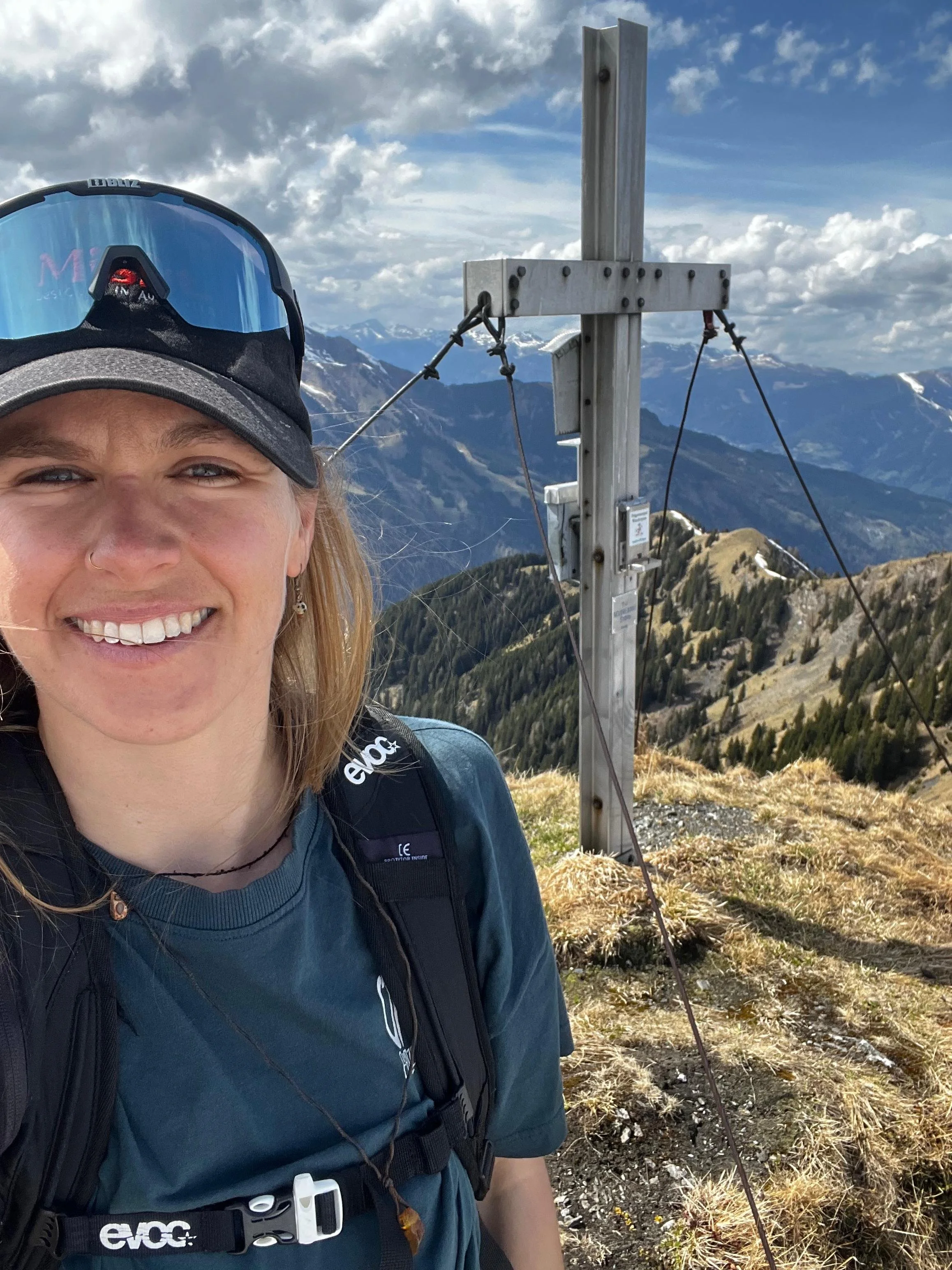
Anne van der Hem (30) is an anthropologist, youth support worker and guide. Through her company, WilderWerk, she works on projects where people, nature and community come together. Her work ranges from project management and nature connections to youth work and creating places where people can learn, create and discover nature and themselves outdoors.
Her perspective on being outdoors is shaped not only by her academic work, but by years of experience in the mountains: living and working in Austria, freeriding and ski touring, guiding, and travelling on foot through landscapes from the Andes to Scotland.
For Anne, being outdoors starts with freedom.
‘“Outside, there is simply more space. You can move, go somewhere, take a different route. You are not constantly being told where to sit, what to do or how to behave. There is something about that freedom that changes how you feel and how you relate to other people.”’
She sees this especially clearly when working with people outdoors. The roles people carry indoors quickly fade. The quiet one may suddenly take the lead. Someone who struggles to sit still may be completely absorbed in building, walking, or working with their hands. Someone who finds conversation difficult may talk more easily when there is something else happening alongside it. Ultimately, it requires even the leader to step down, listen, and become part of the collective. It is not that nature magically solves these things. Rather, the environment changes what is possible.
“‘That is one of the things I find interesting as an anthropologist. We often look at a person and ask what is going on with them. But I also want to ask: what happens when you change the environment around that person? What becomes possible then?”’
That question is also part of why Anne is drawn to adventure and outdoor life herself. She is not interested only in nature as a quiet place to relax. She likes being challenged by it; a long day of hiking through rain and cold weather, sleeping outside, swimming in cold and open water. Finding your way through unfamiliar terrain. A multi-day trek where everything you need is on your back. Or standing on skis at the top of a mountain, knowing that the terrain, the snow and the weather will determine what happens next.
“‘Outside, things don't always go according to plan. You have to respond to what is actually happening. Maybe the weather changes, the path disappears into mud, you are more tired than expected, or the type of snow is completely different from what you thought. You have to adapt.’” For Anne, that is part of the appeal. Nature gives you freedom, but it also asks something of you. You cannot control everything. You have to pay attention, make decisions and sometimes simply keep going. She knows this particularly well from freeriding. “‘When you're skiing powder, you can't just think your way through it. You have to feel the snow, read the terrain and respond with your body. Everything happens at once. You have to be present.”’
That physical awareness is what she describes through the anthropological concept of embodiment: the idea that we don't experience the world only through our thoughts, but through our bodies and through what we do. Walking for days, carrying a backpack, feeling the weather change or moving through difficult terrain can make that very tangible.
“‘You feel your legs, your breath, the cold, the fatigue, the hunger. You become much more aware of what you actually need. After a few days, my head becomes quieter. I'm less caught up in everyday life and much more aware of where I am.”’
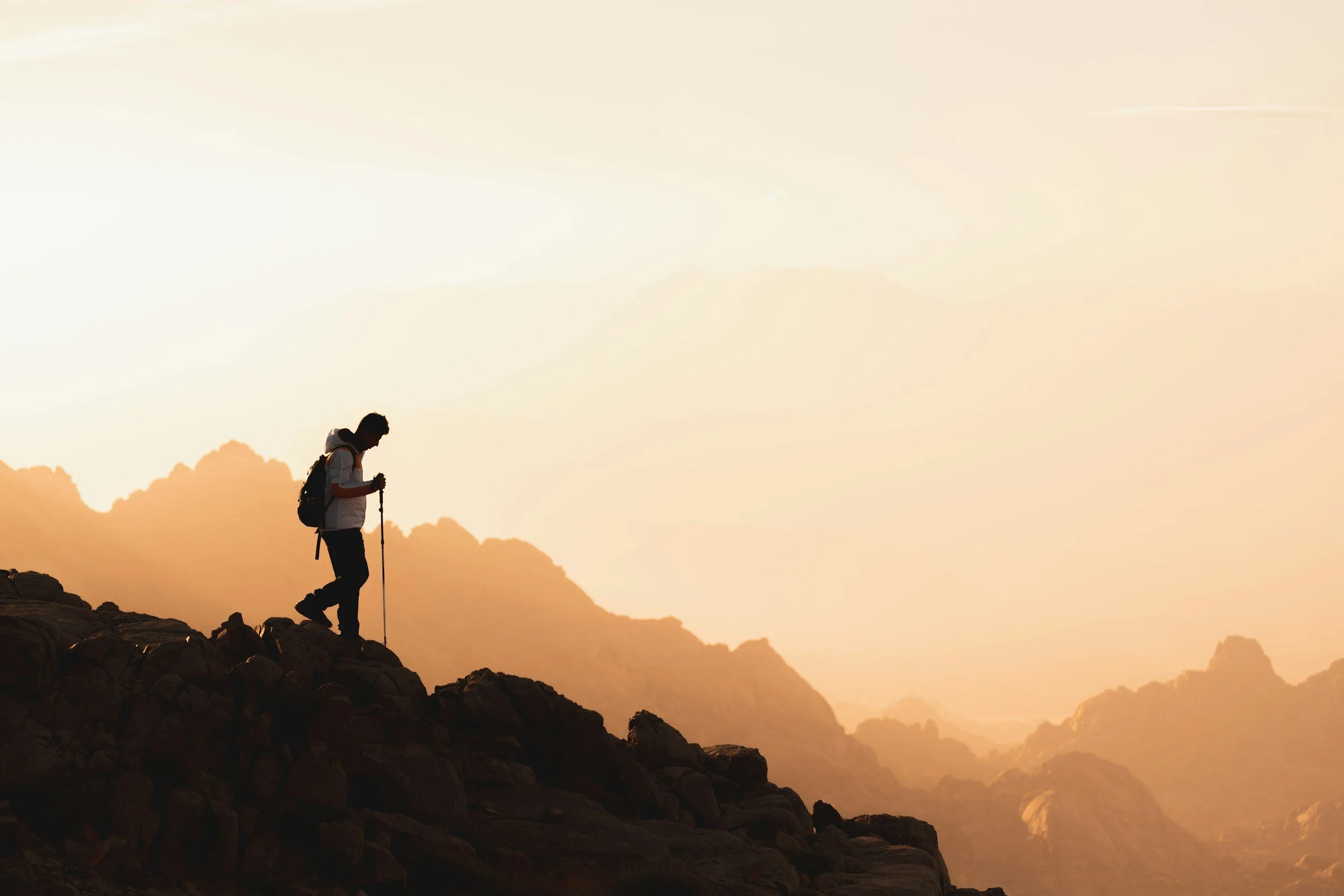
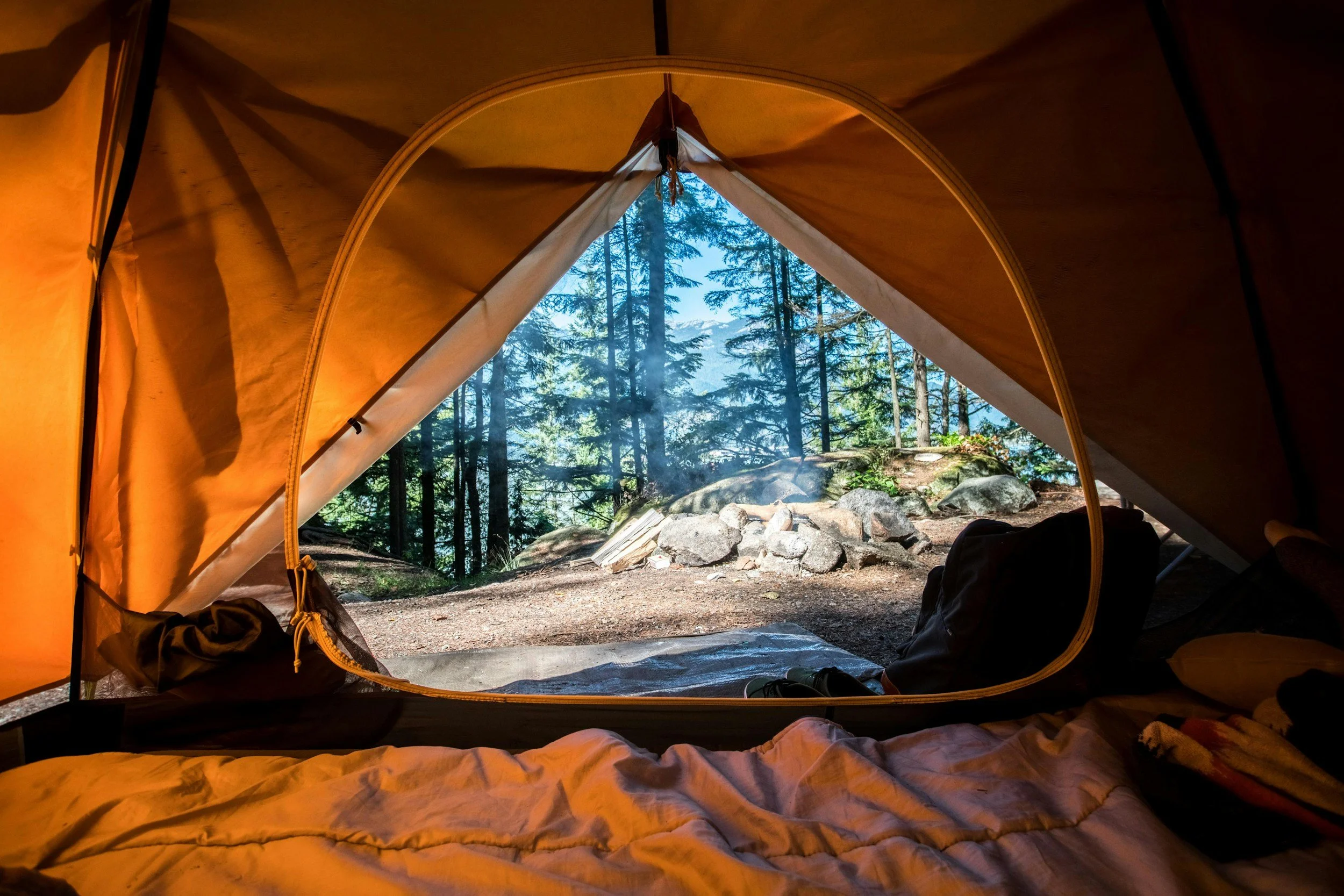
Her favourite way of experiencing this is through multi-day long-distance hikes. She has walked hundreds of kilometres carrying her own tent, food and equipment. There is something liberating about reducing life to what you can carry on your back and allowing the landscape to set the rhythm.
“‘But it is also about feeling alive. Really alive. You are tired, your body is working, you are outside all day, and every day brings something different. There is nothing better than getting into your sleeping bag at the end of a long day, completely exhausted, knowing you have walked through rain, crossed a mountain, found a place to camp or shared some unexpected adventure along the way. Your body is tired, your head is clear, and you feel very much alive.”’
And then there are the moments she cannot plan for: standing on a mountain pass with the landscape stretching out in front of you, watching the light change, seeing a wild animal, or suddenly realising how small you are in relation to the landscape around you. Anne describes these moments as experiences of awe and wonder.
“‘Those moments can stay with you for years. They put things into perspective. You suddenly realise that you are part of something much bigger than your everyday life. For me, that can be life-changing. It changes how you look at yourself, but also how you look at the world around you.”’
At the same time, being outdoors is not only an individual experience. Some of Anne's strongest experiences of connection have come from doing things with other people: walking together, working in a garden, making something, sharing food, doing sports, finding your way through a landscape or spending enough time in the same place for it to start becoming familiar.
So why is reconnecting young people with nature particularly important now? Anne worries that we are becoming increasingly disconnected from the places and ecosystems we ultimately depend on. Much of daily life happens indoors and online, in a world where many things are decided and organised for us. At the same time, she sees a strong desire among young people to get outside, connect with nature and spend time with other people. She saw this during Memmelân, a project she organised for young people at the Tuin van de Toekomst “Garden of the Future”, a food forest she and her family built and take care of. "Young people don't just come for an activity," she says. "There's a real need for a place where they can be outdoors, work with their hands, meet other people and feel connected to something." Over several afternoons, they came together to learn about permaculture, local vegetables and fruits, and traditional crafts. "What struck me was that the value of the project turned out to be much greater than the activity we had planned for the afternoons," Anne says. The young people didn't simply come to learn something or take part in a workshop. Over time, a sense of connection to the place and to each other began to grow.
For Anne, that connection is closely tied to having a relationship with a place. Getting to know it, returning to it, noticing what grows there, which animals live there, how the landscape has been shaped and what stories belong to it. The more you know a place, the more you start to notice it. And sometimes that familiarity opens the door to something else: wonder.
“‘Awe can change your perspective. You can have it on a mountain, but you can also have it standing in a garden looking at something you have never noticed before. You suddenly realise how much is happening around you. That feeling of wonder can make you feel both small and connected at the same time.”’
As a place becomes familiar and meaningful, a sense of responsibility can grow too. And it doesn't have to be a vast wilderness. It can be a garden, a food forest, a piece of land or even the park around the corner.
This is also why Anne does not want to reduce nature to a tool for wellbeing. She is wary of the idea that we should go outside because nature will make us calmer, healthier, happier or more productive. “‘Of course, being outdoors can do all those things. But I don't think that should be the whole story. Nature is not a treatment or a service. We are part of it ourselves. Everything we eat, build and use comes from the same world. We are nature too.”’
That is why, for Anne, the question is not only what nature can do for us, but also how we relate to the world around us. Sometimes it starts very simply: by going outside. Not necessarily with a big programme or a therapeutic goal, but simply by being there and experiencing what is around you. The more often you spend time outdoors, the more familiar your surroundings become and the more of a relationship you can develop with them.
It is about creating opportunities to experience freedom, challenge, connection, curiosity, wonder and belonging. To discover that you can do things you didn't know you could do. To find out that you have something to contribute. To become familiar with a place and the people around you. And sometimes, simply, to feel completely alive.
For Anne, that is what makes being outdoors so powerful. It can shake you out of your usual routines, put you in situations you cannot fully control and remind you that you are part of something much bigger than yourself.
“‘Maybe that is what I keep coming back to. You go outside and something happens. You move, you struggle, you get tired, you see something beautiful, you laugh with other people, you get surprised. And for a moment, you are completely there. You are not separate from the world around you. You are in it.”’
“‘And when you feel that connected to something, you start to care about it in a different way.”’
Find out more about the work Anne does here: