
Your body was made for the outdoors
Wout van Helden, 41, clinical epidemiologist in training, teacher and therapist
Wout van Helden (41) is a clinical epidemiologist in training, as well as a teacher and therapist. While many people talk about the impact of nature from personal experience, Wout often explains it through the lens of science.
"Nature does something that indoor environments rarely do," he says. "It helps people move out of their heads and back into their bodies."
For Wout, things like daylight, fresh air, temperature, sound, movement and space are more than pleasant experiences. They are biological signals that influence how our bodies function. Together, they help shift the nervous system away from constant alertness and towards recovery, attention and balance. One of the first things he notices when people spend time outdoors is that they start to breathe differently. Their shoulders drop, their gaze widens and there is more room for silence, reflection and genuine connection.
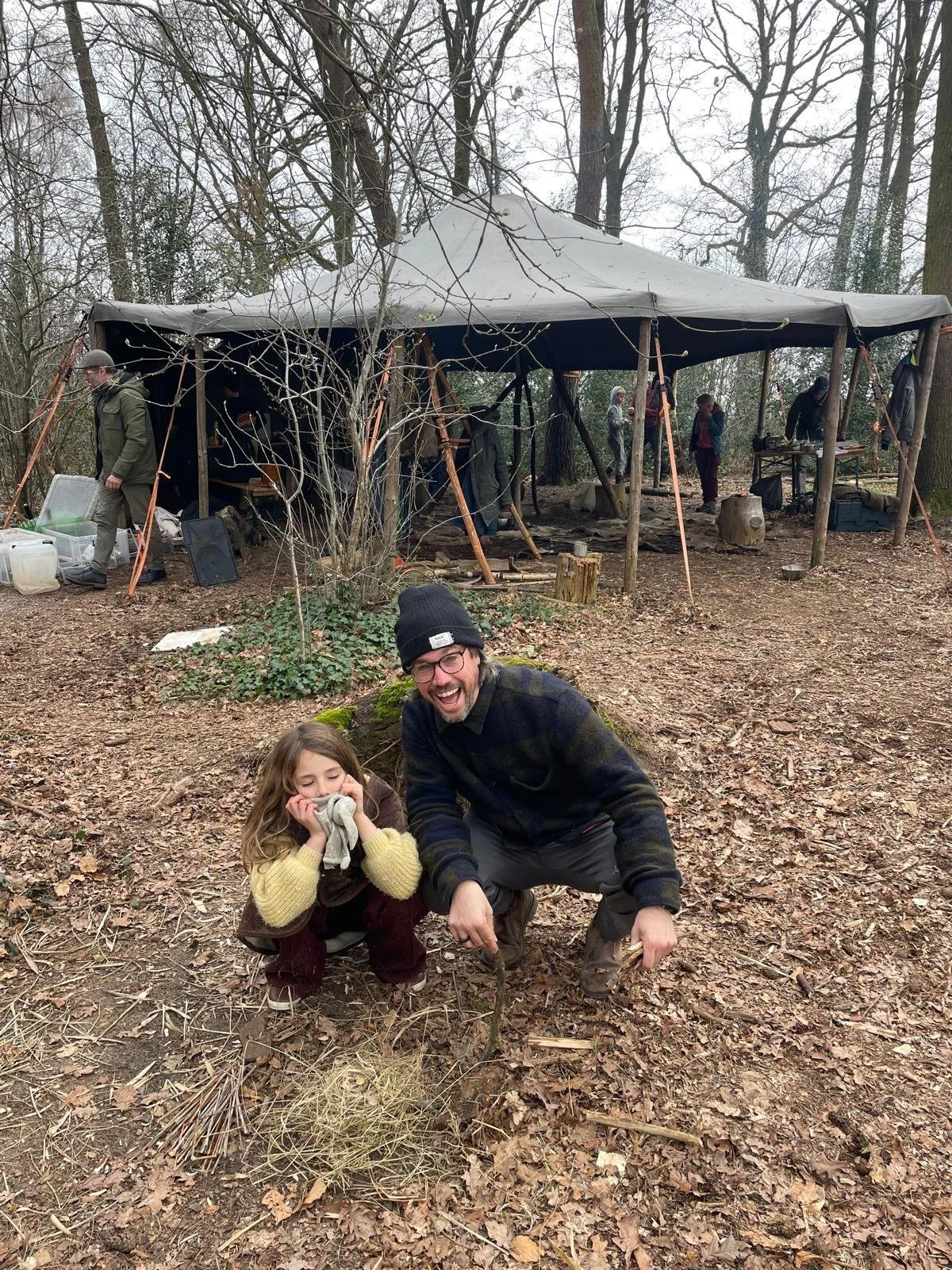
Part of his understanding comes from research. During his training, Wout became familiar with the Study of Origin, a pilot study in which 55 healthy adults spent ten days in the Pyrenees living in conditions that resembled aspects of our evolutionary environment. Participants walked long distances every day, slept outdoors, experienced natural temperature changes, ate simple food and spent time without electronic devices. Researchers observed improvements in several metabolic health markers, alongside temporary signs of physical and immunological stress, likely caused by increased movement and exposure to natural environmental challenges.
"What I find interesting is that I see a similar process happening in people outdoors," Wout says. "Nature doesn't just make us feel calm. It helps us become more adaptable."
According to him, that's an important distinction. Modern life often exposes us to chronic stress through screens, noise, constant stimulation and performance pressure. Nature challenges us too, but in a different way. Wind, sunlight, uneven ground, changing temperatures and natural sounds ask the body to respond and adapt without overwhelming it. Being adaptable, he believes, is one of the clearest signs of health.
Whether it’s during barefoot walks, retreats or bushcraft expeditions, Wout sees the same pattern emerge. People arrive busy and distracted. Gradually, they relax. Then comes reflection, followed by deeper insights about themselves and their lives. One exercise in particular has stayed with him. Participants were asked to make fire from scratch, while guides reflected back what their approach revealed about how they navigate challenges in everyday life.
He also notices that conversations change outdoors. Inside, people tend to step into their roles very quickly, whereas walking side by side creates a completely different dynamic. Without the pressure of sitting face-to-face, conversations often flow more naturally. Looking into the distance, moving through a landscape and sharing an experience can make it easier to think, feel and talk openly.
For Wout, this is especially relevant for younger generations. Many young people are growing up in environments that are increasingly disconnected from what our bodies evolved for: long hours behind screens, artificial light, disrupted sleep, constant comparison and very little contact with nature. "Those are all signals that can keep the system switched on," he explains. Nature provides a different set of signals: daylight, movement, rhythm, biodiversity, sensory calm and opportunities for recovery. According to Wout, those inputs help the body regulate itself more effectively.
Earlier this year, he translated these ideas into what he calls the Rewild Protocol, a practical framework for bringing more nature into everyday life. The principle is straightforward: change your environment, and you change the signals your brain and body receive. That can be as simple as getting outside in the morning light, moving outdoors every day, eating a varied diet, spending time with people you care about and reducing artificial light in the evening. As Wout puts it, nature becomes part of the recovery process.
Wout doesn't see nature-based activities as a luxury or an optional extra. He believes they can play a meaningful role in supporting physical and mental health by influencing the nervous system, immune system and stress response. His advice is practical: spend at least thirty minutes a day outdoors, ideally somewhere with greenery, water or natural light. Set aside a few hours each week for a larger natural environment such as a forest, dune area or river landscape. Take occasional breaks from urban life and, whenever possible, spend several days immersed in nature. Bringing nature back into our lives, he believes, is one of the simplest ways to reconnect with the environment our bodies were built for.
"We are beautifully designed for a world that many of us rarely experience anymore."
Here you can find more about Wout’s work: